| Posted On:Mine Mountain| 31-Aug
Description :-
 Nepal-Tibet Glacial Collapse 2026: Nature Recognises No National Boundary
The 26 August 2026 glacial collapse and flash floods along the Nepal-Tibet border provide a powerful reminder that nature recognises no political boundary. A glacier, river, mountain slope or ecosystem does not stop functioning when it reaches an international border.
The disaster began in the high Himalayas and rapidly affected downstream areas through a cascading combination of ice, rock, sediment and floodwater. Reports indicated that a substantial section of glacier and associated rock collapsed at high altitude, triggering a powerful downstream surge through Himalayan river systems.
The event highlights an important environmental principle:
Political boundaries divide jurisdictions, but they do not divide ecosystems.
This lesson is particularly relevant to Himalayan ecosystem conservation, climate change adaptation, disaster risk reduction, environmental impact assessment (EIA), sustainable infrastructure and responsible mining.
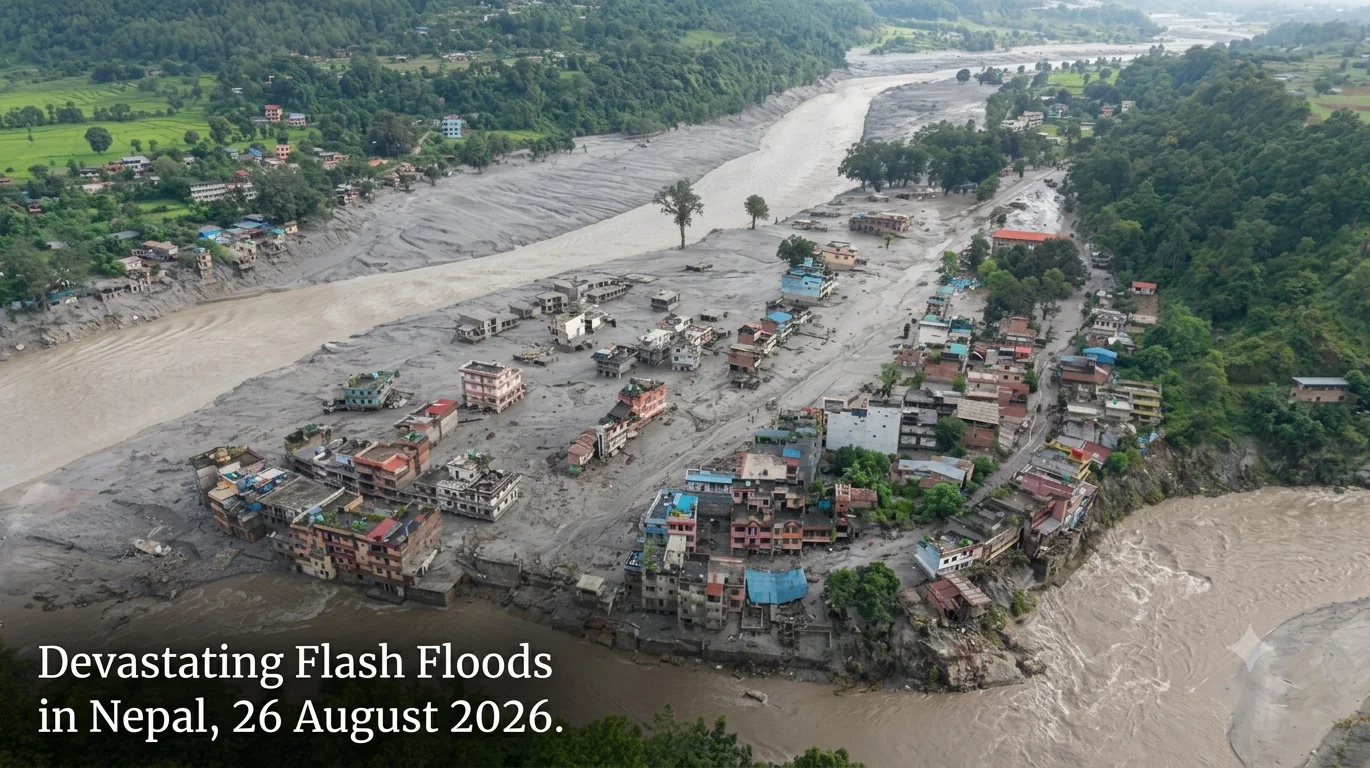
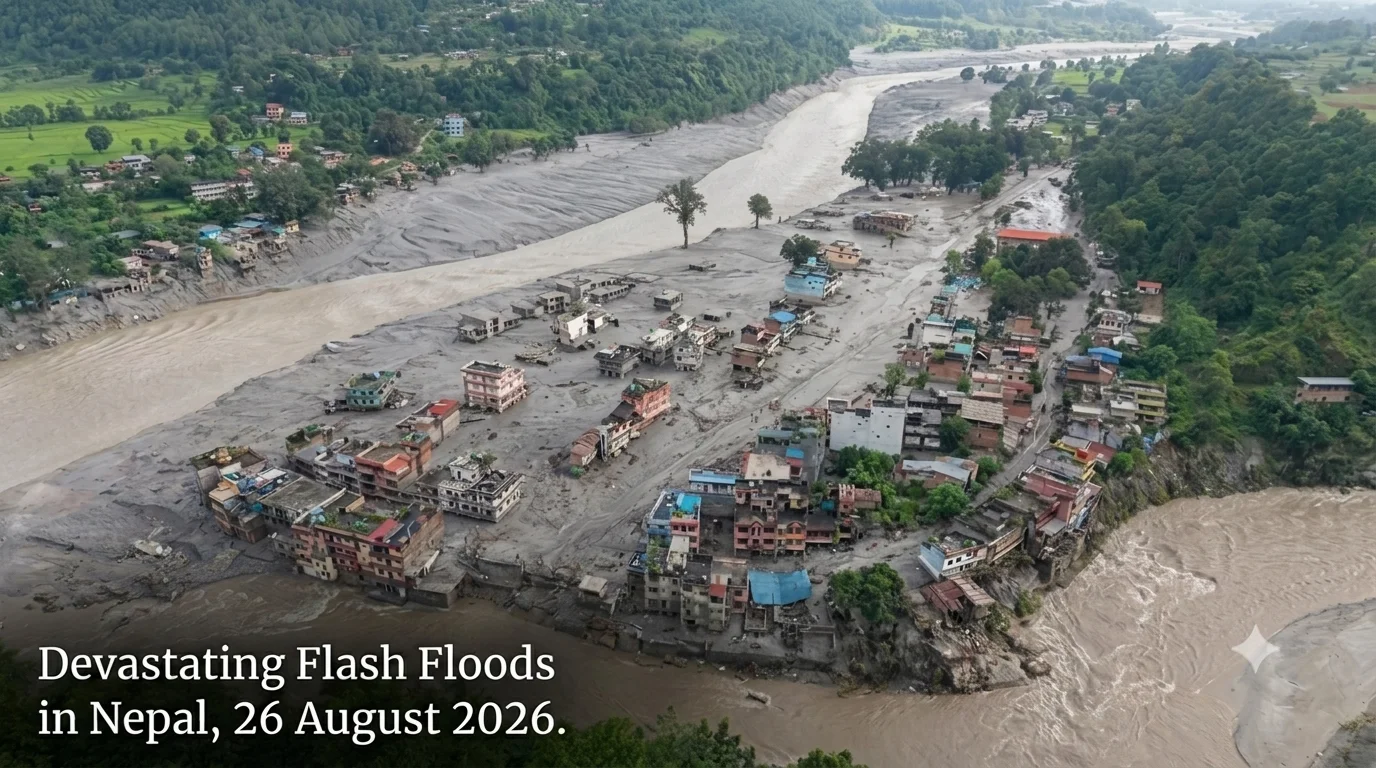
On 26 August 2026, a major ice-rock collapse in the Himalayan border region triggered catastrophic flooding downstream. The event affected communities and infrastructure in Nepal and Tibet, with floodwaters and debris travelling through connected river systems.
The initial event involved the collapse of glacier and rock at high altitude. Satellite observations and subsequent scientific assessments indicated that the collapse released a large volume of ice, rock and sediment into the river system. The resulting surge travelled downstream through the Lhende Khola, Bhote Koshi and Trishuli river systems.
The Trishuli River reportedly rose by as much as nine metres within approximately 30 minutes, demonstrating how quickly high-altitude hazards can transform into downstream disasters.
The event also demonstrated why Himalayan hazards cannot always be understood within the boundaries of a single district, state or country.
Human societies have created national borders, administrative boundaries and jurisdictions. Natural systems operate differently.
When a glacier collapses, a landslide occurs or extreme rainfall affects a mountain catchment, the resulting water, sediment and debris can move downstream across administrative and international boundaries.
The Nepal-Tibet disaster illustrates this principle clearly. A high-altitude event can generate consequences hundreds of kilometres away through interconnected river systems.
This is why transboundary environmental risk should be considered an essential part of Himalayan environmental management.
The Himalayas are not simply a collection of separate mountains divided between countries. They form a connected ecological and hydrological system.
Changes in glaciers, snow cover, precipitation, river flows, mountain slopes and land use can influence conditions downstream.
The consequences may include:
The 26 August disaster therefore needs to be viewed not only as a local emergency but also as a case study in cascading Himalayan environmental risks.
The World Meteorological Organization has similarly described the event as demonstrating cross-border and cascading risks associated with Himalayan hazards.
Climate change adds another layer of complexity to mountain disaster risk.
Rising temperatures can contribute to glacier retreat and changes in snow and ice conditions. At the same time, changing precipitation patterns can influence river flows, slope stability and the likelihood of extreme events.
However, it is important not to treat every individual disaster as being caused by climate change alone.
A disaster may result from the interaction of several factors, including:
Climate conditions + glacier instability + geological conditions + extreme precipitation + land-use patterns + infrastructure exposure + preparedness
This means that climate adaptation in Himalayan regions must be combined with scientific hazard assessment, monitoring and land-use planning.
Scientific reporting following the August event has also highlighted evidence of changing glacier conditions and concerns about increasing instability in the Himalayan cryosphere.
The Nepal tragedy also raises an important question about development in fragile mountain ecosystems. Roads, hydropower projects, tourism facilities, settlements and other infrastructure are essential for economic and social development. However, development in environmentally sensitive areas must be based on scientific assessment and respect the natural carrying capacity of the terrain.
Climate change and Himalayan environmental risks are adding another dimension to mountain vulnerability through changing precipitation patterns, glacier retreat and increasing instability in high-altitude environments. At the same time, unplanned construction, deforestation, excessive slope cutting and development in flood-prone areas can increase the consequences of natural hazards.
True disaster risk reduction therefore requires more than relief and rehabilitation after an event. It requires hazard mapping, climate-risk assessment, Environmental Impact Assessment (EIA), slope stability studies, early-warning systems and responsible land-use planning.
This principle is particularly important for mining and infrastructure development in ecologically sensitive areas. Extraction of natural resources and economic development must be undertaken within scientifically determined environmental limits. Responsible mining, environmental safeguards, land restoration and sustainable resource management are essential to reduce long-term ecological risks.
Most importantly, Himalayan countries must strengthen transboundary environmental cooperation in glacier monitoring, weather forecasting, flood warnings, hydrological data sharing and disaster management. Environmental challenges require cooperation because ecological systems are shared even when political jurisdictions are separate.
Roads, hydropower projects, tourism facilities, settlements, transmission infrastructure and other development projects are important for economic and social progress.
However, infrastructure development in fragile mountain environments must account for the natural carrying capacity of the terrain.
Poorly planned development can increase exposure to hazards through:
Therefore, sustainable development does not mean stopping development.
It means planning development within scientifically understood environmental and geological limits.
Environmental Impact Assessment, or EIA, is an important tool for identifying environmental risks before major development projects are implemented.
In fragile mountain environments, environmental assessment should consider more than the immediate project site.
Depending on the project and applicable regulations, assessment may need to examine:
A project may be geographically located in one jurisdiction while its environmental consequences extend into another.
This makes catchment-level and landscape-level environmental planning particularly important in sensitive Himalayan regions.
The same principle applies to mining.
Mining is an important economic activity and provides minerals required for infrastructure, manufacturing, energy and technological development.
However, mining in mountain and ecologically sensitive areas requires careful environmental planning.
Responsible mining should consider:
The objective should not be simply to extract resources.
The objective should be to ensure that resource development takes place within appropriate environmental safeguards.
For mining companies, consultants, regulators and environmental professionals, the broader lesson is clear:
Environmental compliance should be treated as a core part of project planning rather than an activity performed only after environmental risks become visible.
Traditional disaster management often focuses heavily on rescue, relief and rehabilitation after an event.
Those measures remain essential.
But Himalayan disaster risk reduction also requires action before a disaster occurs.
Important measures include:
Recent discussions following the Nepal disaster have highlighted the importance of improved glacial monitoring and early-warning systems for Himalayan communities.
One of the most important lessons from the Nepal-Tibet disaster is the need for stronger cooperation between countries sharing Himalayan ecosystems.
Countries may have different:
But they share natural systems.
Effective Himalayan risk management can therefore benefit from cooperation in areas such as:
Satellite imagery, remote sensing and ground-based observations can help identify changing glacier conditions and potential hazards.
River-level and flow information can help downstream authorities understand rapidly changing conditions.
Cross-border weather information can improve preparedness for extreme precipitation and related hazards.
Early warnings are particularly important where flood waves can travel rapidly downstream.
Shared emergency protocols can improve coordination when disasters affect border regions.
Universities, geological institutions, environmental agencies and international organisations can collaborate to improve understanding of Himalayan hazards.
Long-term climate resilience requires coordinated planning rather than isolated responses by individual jurisdictions.
The implications are also relevant to India because Himalayan rivers and ecosystems extend across national boundaries.
Indian Himalayan states such as Uttarakhand, Himachal Pradesh, Sikkim and Arunachal Pradesh face different combinations of glacier, landslide, flood and infrastructure risks.
The appropriate lesson is not that every Himalayan development project creates a disaster risk.
Instead, the lesson is that development decisions in high-risk mountain environments should be supported by site-specific scientific assessment and effective monitoring.
India's Himalayan planning can benefit from stronger integration of:
Recent efforts in Uttarakhand to establish glacial-lake early-warning capability demonstrate the growing importance of monitoring rapidly changing high-altitude environments.
For the mining sector, the Nepal disaster reinforces a broader principle:
Resource development must operate within ecological limits.
Mining projects in sensitive mountain environments should not be assessed only in terms of mineral availability and economic return.
Environmental factors must also be considered, including:
Land + Water + Biodiversity + Geology + Climate Risk + Communities + Long-Term Restoration
This approach supports the principles of responsible mining, sustainable resource management and environmental stewardship.
Mining regulators, project proponents, environmental consultants and other stakeholders can use disaster-risk information to strengthen project planning and environmental safeguards.
A major glacier and ice-rock collapse in the Himalayan border region triggered a catastrophic downstream flood involving water, ice, rock and sediment. The disaster affected areas in Nepal and Tibet and caused extensive damage to communities and infrastructure.
Available scientific assessments indicate that a substantial glacier-related ice-rock collapse triggered the flood. The released material entered the river system and generated a powerful downstream surge. Early reports considered an earthquake as a possible trigger, but the USGS later indicated that the seismic signal was generated by the landslide itself.
Because mountain hazards and river systems do not follow political boundaries. Ice, water, sediment and debris generated in one area can travel downstream into other administrative or national jurisdictions.
It demonstrates the importance of treating the Himalayas as a connected ecological and hydrological system and strengthening monitoring, environmental planning and disaster preparedness.
Climate change can alter glacier and snow conditions, precipitation patterns and other environmental factors that influence mountain hazards. However, individual disasters usually involve multiple interacting factors and should be assessed using event-specific scientific evidence.
Environmental Impact Assessment helps identify potential environmental and social risks associated with projects before implementation. In sensitive mountain areas, assessment can include geology, slope stability, water systems, biodiversity, hazards and downstream impacts.
Mining and mineral development should be planned with appropriate environmental safeguards, geological assessment, water protection, slope stability, restoration planning and disaster-risk considerations.
Countries sharing Himalayan ecosystems may also share rivers, glaciers, weather systems and environmental risks. Cooperation in monitoring, data sharing, early warning and disaster response can therefore improve regional preparedness.
The real lesson of the 26 August 2026 Nepal-Tibet disaster is not limited to glaciers, floods or landslides.
It is about how humanity understands its relationship with the natural world.
Human beings created political boundaries. Nature did not.
Countries may have different governments, laws and development priorities, but they share mountains, rivers, atmospheric systems and ecological processes.
A disaster originating upstream can affect communities downstream regardless of national borders.
Nature should therefore not be viewed merely as a source of land, minerals, timber or water. It is an interconnected system on which human society ultimately depends.
The Nepal disaster should encourage a shift from development without adequate environmental consideration toward responsible development within ecological limits.
Economic development and environmental protection do not have to be treated as mutually exclusive objectives. Sustainable development requires understanding environmental limits and incorporating those limits into planning.
For the future of Himalayan conservation, sustainable mining, infrastructure development, environmental management and disaster-risk reduction, the message is simple:
Borders may divide nations, but they cannot divide ecosystems.
When nature speaks, humanity must listen.